Showing posts with label X-COM. Show all posts

Thursday, October 2, 2014

8 Elements of the Nerd's Perfect Video Game

In this post, I'm going to attempt to distill my favorite features of video games and break them down to components I would love to see make up a single game that would, for The Nerd, be the end all of video games.

Until the sequel comes out, with improved graphics and smell-o-vision.

1. Turn-Based Strategy

This is a must for me. Real-Time Strategy games require too much in regards to practice and memorization. I don't argue that they are fun, but my method of thinking is more analytically, given to examining a situation to make the best decision, without feeling rushed. The strategy aspect highlights this as well -- sure, a turn-based RPG is acceptable, but adding unit location and map variation to conflict scenarios really draws out the strategy-enthusiest in me. And it also highlights the ability to solve a scenario via multiple methods (direct approach, bait and switch, opposed strength/weakness, etc...). I have seen games that use turn-based strategy for an overworld and then something more action-oriented to resolve conflicts... I'd be ok with that as well.
X-COM: Enemy Unknown's Turn-Based, Strategic Combat.

Examples: X-COM: Enemy Unknown had a beautiful system with varied maps, and the fog of war was a nice touch. Banner Saga was another great looking example, which focused on each unit being different, while the maps were not so exciting. A classic example would be Final Fantasy Tactics, though that system is a bit dated and runs too slow compared to recent ventures.

2. Team Building

Being able to grow your team by collecting and grooming new units adds another reason to play the game, aside from the story and combat/conflict. However, these units should be unique or extremely varied, should have different strengths and weakness, and must have different recruitment methods and rarity.
Yeah, 108 characters will work, Suikoden 3.

Examples: The Suikoden series has a roster of 108 characters, which are different across all the games. I've only finished the 3rd game in the series, but it was awesome recruiting such a large cast of characters that had individual stories, unique appearances, and different ways to get them on your team. Pokemon is a better known series that features a collectible, team-building style, and it worked as well. Shin Megami Tensei games have one of the most interest versions of this, with large cast of recruitable monsters, many of which can only be acquired through fusing others... Collectible card games are also appealing in this manner.

3. 'Town' Building

Building a town or location up as you advance in the game is an easy way to make a player invested. It can be a negligible aspect of the game that provides non-mandatory benefits for those who like the simulation-like aspect. Visiting a location you've help 'build' from the ground up is refreshing. Even better if you have to defend it or interact with it during missions. It can also offer an avenue of interacting with the large cast you've recruited above, if they end up relocating to this new location.
One method of "town" building, with X-COM's base screen.

Examples: Suikoden, again, uses this pretty heavily, and it was my absolute favorite part of the third game. I cared less about the main story and more about gathering the "108 Stars of Destiny" in Thomas' castle... XCOM: Enemy Unknown also features a base-building aspect that, while a touch bland, did introduce a puzzle-like aspect and some additional strategy to the overall game. A classic example would be Dragon Quest/Warrior III, which had a town that grew as your progressed the story.

4. Character Evolution

Characters should change throughout the game. Most commonly, this will occur via the story, but that's not the only way to do it. Characters that can unlock abilities that alter the game to a decent degree would work, or characters that undergo a physical change after a certain threshold is met allow the player to set goals based on their characters. Stagnant characters can kill a game fairly easily.
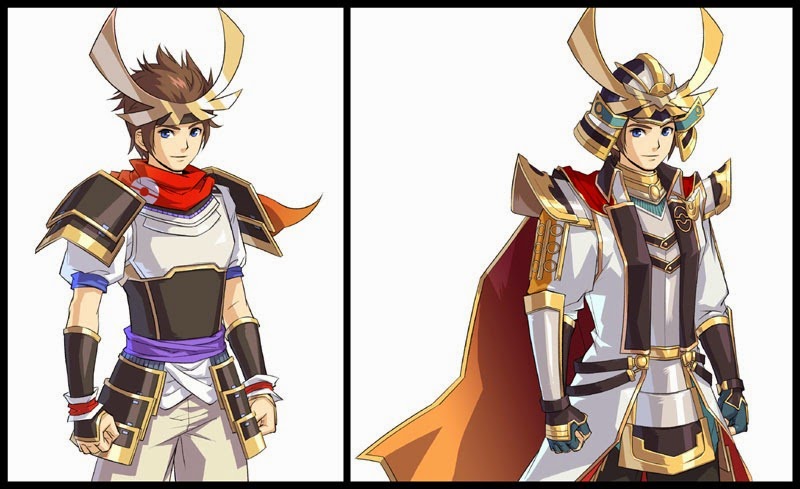
Pokemon Conquest's monsters and 'trainers' could evolve.

Examples: X-COM: Enemy Unknown had your soldiers gaining game-changing abilities as time went on, and their physical appearance changed drastically based on their equipment (and, after the expansion, certain abilities). Pokemon is an obvious choice here, with almost every monster being able to evolve. A less obvious example would be the main character of Knights of the Old Republic, who has a major revelation that is surprising and changes the way the player looks at the character. Similar again to the protagonist in the first Bioshock.

5. The Antagonist's Story

This one is probably the easiest to dispute from this list, but it is absolutely a requirement to be the perfect game for me. Having an opportunity to see the antagonist's story is a minimum. Even better if you can, in some fashion, play through their story. Either as post-game content, or recruiting them to your team, or maybe just given control of them for a couple of sequences.
Magneto was clutch in the final battle of X-Men 2: Clone Wars.

Examples: Chrono Trigger allows you to recruit on of the villains on your team. I'm fairly certain you could play as the antagonists in Suikoden 3, after finishing the main game, but I don't recall. Fallout: New Vegas allowed you to be a villain, and never required you to "save the world" or "fight the bigger evil." Golden Sun: The Lost Ages actually gives you control of some of the main antagonists from the first game, which was awesome. A classic example would be X-Men 2: Clone Wars, where Magneto became a powerful player character after you defeat him in a later level of the game.

6. Variety of Game 'Modes'

Cutscenes separating similar combat scenarios/styles gets boring, eventually. Sure, some games can come to a close before this happens, but I personally love longer titles. My favorite way to break this up is to work in an 'large battle' system or an 'territory conquest view.' These would have different gameplay elements that still required strategy.
Budokai 2 had a board game campaign within a fighting game!

Examples: Suikoden, again, featured this, in the form of large scale battles that gave you control of larger forces that followed different rules when being controlled. X-COM: Enemy Unknown's base building and global management definitely broke up the monotony of repeated turn-based battles. A classic example would be Ogre Battle 64, which had to methods of play - a map view, where you moved your forces around, and a combat mode that played like a typical RPG. The Devil Survivor series also mixed turn-based strategy with traditional RPG elements. Even Dragon Ball Z: Budokai 2 had a "campaign mode" that worked in a boardgame element. When pieces on the gameboard met, the combat would take place via traditional fighting game combat -- the losing player lost their piece.

7. An In-Depth, Variable Story

Several of the strategy games I play don't bother with a continuous, in-depth story. And the story should present you with options or opportunities that change the way the game plays, so that there is still a motivation to replay the game.
Mass Effect's Decision Tree. Notice how 3 goes off on its own...

Examples: On the negative side, neither Pokemon Conquest nor X-COM: Enemy Unknown have in-depth, persistent stories. They focus on generic or minor stories, with a focus on replayability. This works for them, but I'd prefer something continuous, and with a variety of meaningful choices. The Fallout games have always featured this. Something like the Mass Effect or Dragon Age series, however, where the choices made persist through multiple games, would be even better. Though Mass Effect specifically missed many good opportunities...

8. Appealing Setting/Theme

For me, an appealing setting or theme could pull from an existing universe (Marvel, Star Wars, etc...) or feature elements I enjoy (post-apocalypse, space travel, etc...). Generic fantasy would be hard to feel original, though it could be done. I'd love to see something in this format that includes giant mechs...
A turn-based RPG that uses Gundams? Oh, yes please, MS Saga: A New Dawn

Examples: The Front Mission series features giant mechs, which I love. Fallout has the post-apocalyptic angle covered, and Knights of the Old Republic was awesome for its innovative storytelling AND the fact that it was set in the Star Wars universe.


Games that blur the lines.

There have been some titles that have blurred the lines and mixed some of my favorite elements, though I know of none to get them all:

Pokemon Conquest - Combines Team Building, Variety of Game Modes, Character Growth, Variety of Game Modes, Appealing Setting/Theme. Technically it also hits The Antagonist's Story, though that's because there isn't a true antagonist. I love how it mixes Pokemon with Nobunaga's Ambition for the setting/theme. The strategy aspect is a bit too basic and easy, and there is no 'true' consecutive story, but this game comes pretty damn close.

Suikoden Series - Team Building, Town Building, The Antagonist's Story, Variety of Game Modes. And there are two titles in the series that feature Turn-Based Strategy. These games are pretty awesome, though each suffers from a variety of issues. I would love to see a new, next-gen entry into the series.

Fallout Series - Turn-Based Strategy (in 1, 2, and Tactics), Team Building, Town Building, Character Evolution, An In-Depth, Variable Story, Appealing Setting/Theme. The post-apocalyptic setting gets me every time...

Star Wars: Battlefront 2 (Conquest Mode) - Turn-Based Strategy (via galactic map), Team Building (you had to unlock different units as time progressed), Town Building (you collected planets as you won battles), The Antagonists Story (you could be the Empire!), Multiple Game Modes (board game-like galactic map and then combat as a 3rd Person Shooter), Appealing Setting/Theme (Star Wars!). This game had a lot to love. With some polished combat and maybe a story-driven conquest mode, it could have been damn near perfect for me!


If you have any games that hit multiple points here, let me know in the comments! Also, if there are different elements you'd need for your perfect game, I'd love to read about them! Right now I'm playing MS Saga: A New Dawn and... Well, Middle Earth: Shadow of Mordor, which doesn't mix any of my favorite elements, really, but is still pretty damn awesome!

Wednesday, September 5, 2012

Hunting Game(s): X-COM and XCOM

Last week I posted a bit on the upcoming XCOM: Enemy Unknown (for 360, PS3 and PC). Taking a look through my Steam library, I realized I own the original, X-COM: UFO Defense. I don't know when it got there, it must have been in a pack with something else, but I was surprised enough to try it out, even though every YouTube video I've seen of it makes it appear to be highly dated -- like Oregon Trail, but with aliens.

I was wrong.

Well, it is dated, but it is NOTHING like Oregon Trail. In fact, it is one of the most in-depth strategy games I have played to date, and I keep restarting before I get terribly far.

The Earth is in the process of being invaded by aliens. It is your job, as the leader of a secret, paramilitary organization, to stop the invasion and defeat the aliens.

Seriously, though, they are pretty serious about putting you in charge. Not only are you in control of creating and maintaining bases, watching out for aliens, and then beating them up, you actually have to finance everything, conduct research into advanced human technologies and studies of alien tech, as well as hire troops, name them, and then hire a bunch more when your entire army gets decimated by an advanced alien landing party.

It is difficult. This is partly because the UI is clunky and certain things we take for granted today are not present -- you have to choose every character's load out (and there are a bunch of them, I think starting ships let you take 14 soldiers/several Heavy Weapon Platforms on each mission) at the beginning of each mission and it is impossible to check their stats at that point -- hopefully you named them something cute that helps you remember who can shoot straight and who's a coward (I name all my cowards "Fodder").
So... Many... Soldiers...

The game play is spread between managing your bases, building them up so they can produce what you need and detect enemy ships, and then completing missions. Missions appear when you shoot down alien ships, find them landed, find a base they've created, aliens find your base, aliens decide to decimate a large population, and that's just what I've seen so far -- I don't know if there will be more or not.

The aliens are pretty diverse as well -- Sectoids are stereotypical little grey men with bulbous heads, while Mutons are big, ogre looking bastards. And there are several enemies I have yet to see (because I mismanage things and go broke, apparently).

If you are looking for a deep strategy game and don't mind that it's a bit on the vintage side of  thing, there is no better place than X-COM. It is also serving to get me amped for the upcoming game which, while updated and streamlined (aka simplified) compared to UFO Defense, looks amazing.

I'll be getting it for PC if anyone is interested in trying out the multiplayer, which is featured in the video below:


See you there!

Monday, September 3, 2012

Extra! Extra! Novels Edition

Hi Folks!

I'm cramming in this post a little bit late -- I've spent the holiday spending time with the Wife and X-Com: UFO Defense (which is dated but more fun than I expected!).

For this week's slew of suggested reads, I'm going to be taking a look at some of my favorite novels -- my only restrictions will be that there should be no repeats from previous posts.

Here goes:

Shogun by James Clavell
This title might seem a little out of place with my normal brand (being that it is historical fiction as opposed to Sci-Fi or Fantasy), but I love it all the same.

It follows many characters, though initially we stay with John Blackthorn as his ship washed up on Japanese shores in the 1600's. He has to learn the language, the culture, and the many layers of deception in this new society. If he pulls it off, not only will he keep his head, but he could be wealthy beyond his wildest dreams.

The book changes names and alters events, but for the most part follows historical events and characters accurately. Besides being an interesting story, it also offers a very interesting insight into a different culture. How accurate it is, I cannot say, but it was interesting none the less.

My only complaint is that the ending didn't wrap things up quite like I wanted, though I suppose that's difficult for most books that weigh in at over a thousand pages.
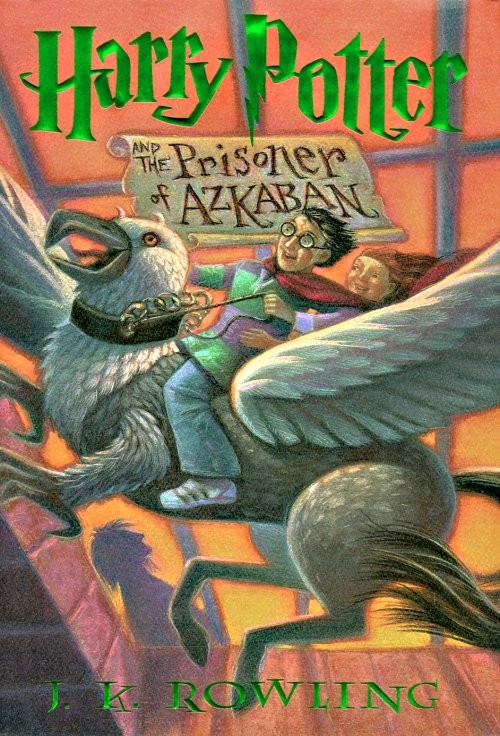
Harry Potter and the Prisoner of Azkaban by J. K. Rowling
The Harry Potter series is no hidden gem to today's readers, so this is just my opportunity to acknowledge my favorite title in the series.

Azkaban is a very tense novel in which Harry has to come into his own while feeling completely alone. This year at Hogwarts introduces some of the more interesting characters in the series -- my personal favorite Sirius Black and the always interesting (in the books!)Remus Lupin. The inclusion of a little bit of time travel and one of the happier endings for a Potter novel make this one my favorite, bar none.
Dune by Frank Herbert
A Sci-Fi classic, and with good reason. I read it for the first time last year (shame on me, I know), and I absolutely loved it.

The story takes place in a universe that could be our own, set in the far, far future. The setting itself is interesting as you see it in snippets, while the story could be seen as similar to Shogun: the main character, a young man named Paul Atreides, has to seek shelter with relatively secretive natives, the Fremen, on the planet Arrakis (known as Dune). He learns their ways and joins their culture, all so he can, eventually, strike back at the many enemies that helped destroy his father and family. If this means taking on the Emperor that rules the known galaxy, so be it.

The characters in this novel are sometimes twisted, often times perverse, and at all times interesting. Paul himself is an especially bad ass character in fiction.

On a side note: Sandworms are pretty damn cool.
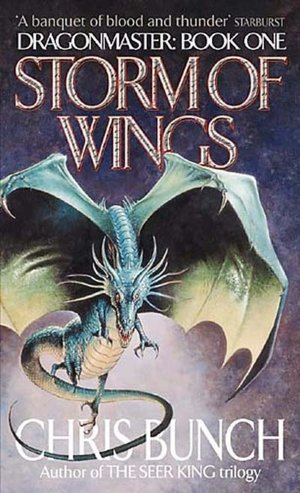
Dragonmaster: Storm of Wings by Chris Bunch
Out of all the titles here, this is probably the least known. It deals with a fantasy world in which dragons exist, mostly as a menace, and wars are fought with sword and steel.

Then enter Hal Kailas, the protagonist who just can't let the status quo get by. He entrenches himself as an interesting character from the start and will continue to grow on the reader, especially if they have any childhood obsession with dragons (raises hand). The bulk of the story comes from Hal's exploits as a soldier, the most important of which being his help pioneering the use of dragons as tools of war.

Some really great storytelling and realistic characters -- even with the inclusion of dragons and some minor magic.

The sequel stays strong and concludes the main story. The third, and final, novel is about life and events after the war, and doesn't have the same steam of the other two.

The Count of Monte Cristo by Alexander Dumas
That's right, I've FINALLY started to read the novel. I would be farther along, but there was some debacle with Barnes and Noble not making it clear that their version was abridged (check the INSIDE covers and title pages!).

I'm not very far in at all, but the writing is superb (if a touch dated -- and populated with a bit of French) and the story, while already significantly different from the 2002 film adaptation, remains interesting and fresh.

To fans of the film thinking there might not be many major differences -- Fernand is actually a poor fisherman who is more like a cousin to Mercedes than anything. He's still love struck and jealous of Edmond, but other than that he has no relation to Mercedes betrothed.

I am very much looking forward to finishing this book, finally!


That's all for now. A bit short, I know, but it will have to do!

I'm also working on the next Pull List Review, so keep an eye out for those posts in the near future!

Wednesday, August 29, 2012

Hunting Game(s): Upcoming and Now Playing

I know I posted a bit about the Vita yesterday, but that was more of a random update that I found interesting. This week's rendition of "Hunting Game(s)" (which I'm thinking of re-branding. At first it was pun-ny, not I'm not enjoying it) is about upcoming items and what I've been playing.

Titles on my Radar

X-COM: Enemy Unknown


Yes, that is an hour of game play footage. And yes, it is awesome.

Pros: It looks like the perfect game for me. Literally, when I think of a dream game, it is apparently X-COM (which I've never played anything related to before). It is a gorgeous, interesting, story-oriented strategy game with SO. MANY. OPTIONS! I'm really looking forward to this title, which drops October 9th.
Cons: I'm torn between getting it for 360 or PC, and I've NEVER had that issue before...

Dishonored


Shorter video this time, but still awesome.

Pros: This looks like a mix between Bioshock and Assassin's Creed, and I love the idea. It has several different approaches to each mission, interesting abilities, potential for a good story, and is set in a steampunk world. It drops... on October 9th.
Cons: It comes out the same day as X-COM! I've cut back my gaming expenses in light of other things, and only one of these games will make the cut, the other will be something I avidly await a price drop for. I'm tempted to choose this one SIMPLY for the fact that the pre-order bonus is an actual set of Tarot Cards...

Maybe I'll play the lottery this month...

Call of Duty: Black Ops 2

I'm not posting a video, check back to last week's post for a good one!

Pros:The release date is November 13th, which means it won't have any other competition (that I can think of) for a November purchase. I'm looking forward to the changes and it will be nice playing a game that I know most of my friends (who all live far away) will purchase as well.
Cons: As a series itself, I only like CoD for the multiplayer, and usually only when I'm playing with friends. I'm concerned that, for all its changes, it will just be more of the same old show we've seen before.

Now Playing

360: CoD: Modern Warare 2. I've been picking this up and playing it to scratch the FPS/multiplayer itch and it's one of the only games I have in common with my brothers (for now). As good as I remembered (knifing especially), though often frustrating due to NoobTubes and Campers.
Spider-Man: Edge of Time. Picked it up on super sale from Amazon awhile back with the intention of selling it. Apparently everyone and there mother bought it at the same time and wouldn't buy my copy. So now I'm replaying it to test out some of the new things release via HeroHQ (costumes and arena) while getting achievements (I played the PS3 version last time).

PS3: Nothing! My brothers (a couple states away) have it for now. Which is unfortunate, because I need to to download Final Fantasy VII to my Vita. CURSES!

PC: Nothing serious, atm. Interested that The Old Republic is going free to play -- I'll feel less guilty about not making much time for it -- I'm waiting for the next big expansion, then I'll try to navigate the new server I got moved to.

3DS: Picked up Devil Survivor 2 again, playing it here and there. Still not as good as the first one, but I was able to get past the level that was irking me. Will eventually finish it.

Vita: Still picking up and playing Mortal Kombat. Not too often, but I'm glad I have it for the next time I get a fighting game urge.

PS2: Speaking of fighting games, I've been thinking of playing through Dragon Ball Z: Infinite World again. Haven't started yet, but it's somewhere on my to-do list.

That's it for now, no clue what next week will bring!